Mitosis
- ICSE Class 10, Unit 1 Basic Biology
Mitosis is the cell division in which one cell splits into two new cells, each with as many chromosomes as the parent cell.

Body cells divide by mitosis to grow and to repair damage. Before it starts, the cell spends time in interphase. In this phase each chromosome makes a copy of itself. Then come four stages, in this order:
- Prophase: chromosomes coil up and become visible. The nuclear membrane breaks down.
- Metaphase: chromosomes line up across the middle of the cell.
- Anaphase: the two chromatids of each chromosome are pulled to opposite poles.
- Telophase: a new nucleus forms at each pole, and the spindle fibres disappear.
A small example
A human skin cell with 46 chromosomes gives two cells with 46 each. That is why a cut on the knee heals by mitosis. The new cells match the old ones.
Where marks go
The 2025 ICSE Biology paper asked for a labelled animal cell in metaphase with four chromosomes, for 3 marks. CISCE's report on the 2025 ICSE Biology paper lists what went wrong. A plant cell was drawn instead of an animal cell. Chromosomes were not shown doubled, or were not on the middle line. Centrioles or labels were missing. Some drew anaphase instead.
So read the stage and the chromosome count before you draw. The draft marking scheme for the ICSE 2027 specimen paper also asks which division heals a wound, and how many chromosomes each new cell gets. The answers are mitosis, and 46.
The marking scheme can also ask for a reason. For anaphase, the 2024 marking scheme's reason was that chromatids are pulled toward the poles.
Sources
Facts last checked against these sources on 30 September 2026.
- ICSE Biology syllabus, Examination Year 2028 edition (January 2026), Class X unit 1 · CISCE
- Analysis of Pupil Performance, ICSE Biology 2025 (October 2025) - Questions 1(x) and 3(v) · CISCE
- Analysis of Pupil Performance, ICSE Biology 2024 (November 2024) - Question 8(v) · CISCE
- ICSE 2027 Biology specimen question paper and draft marking scheme - Question 6 · CISCE
About the author
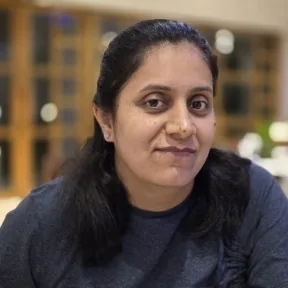
Founder Member & Academic Lead
An IIT alumna (M.Sc., M.Phil.) with over 25 years in teaching, child psychology and learning assessment. As Academic Lead at EduBrahma, she leads the method TRUtesting uses to find where and why a child loses marks.
Deepti Sardana on LinkedIn