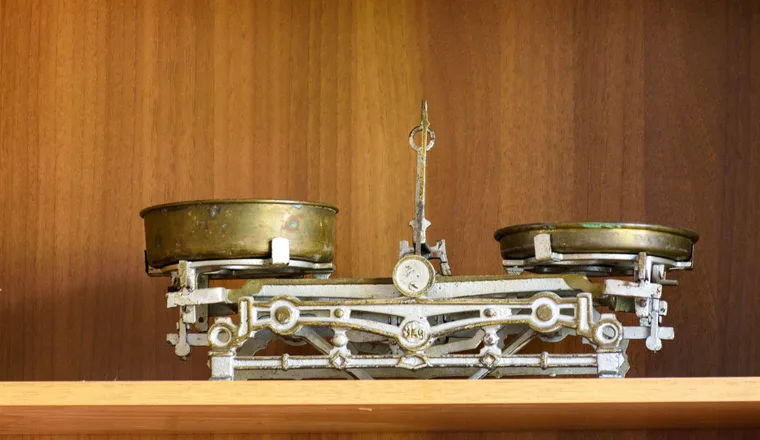
Blueprint
A blueprint is the plan behind a question paper: which units it covers, the marks for each, and the kinds of questions asked.

CBSE's 2021 handbook on assessment describes a blueprint as a plan for how a test will be built. It is usually a table. The units of the syllabus run down one side. The skills being tested run across the top. Each box holds the marks for that pair.
What does CBSE publish for Class 10?
CBSE's Maths curriculum for 2026-27 prints two parts of this plan. The first is the marks for each unit, also called unit weightage. Maths gives Algebra 20 of its 80 marks and Geometry 15. The same unit table covers both Maths Basic and Maths Standard.
The second part is a question paper design, sorted by the kind of thinking asked. In Maths Standard, 43 marks test remembering and understanding. Another 19 marks test applying what you know. The last 18 test analysing, judging and creating.
CBSE sets these marks by unit, not by chapter. Our post on chapter-wise weightage for Class 10 lists every unit for Maths and Science.
What about ICSE?
CISCE's ICSE Physics syllabus, in its edition for the 2028 exam, sets one paper of two hours for 80 marks. Another 20 marks come from practical work. The syllabus prints no marks for each topic.
What a blueprint does not tell you
A blueprint shows where the marks sit across a paper. It does not say which questions will come. Our reading of the CBSE Class 10 Maths 2025 paper shows how one real paper was built.
Sources
Facts last checked against these sources on 30 September 2026.
- Handbook of Assessment and Evaluation (2021) - glossary and chapter 3, preparation of test blueprint, pages 22-23 · CBSE
- Mathematics (041 and 241) curriculum, Class X 2026-27 - unit marks and question paper design · CBSE Academic Unit
- ICSE Physics syllabus, Examination Year 2028 (published January 2026) · CISCE
About the author
Chief Architect
An engineer (B.Tech, Computer Science) with over 20 years of preparing students for entrance exams, including as Dean at FIITJEE and Vice-President at Aakash. He is the chief architect of the TRUpreBoards evaluation engine.
Mohit Sardana on LinkedIn