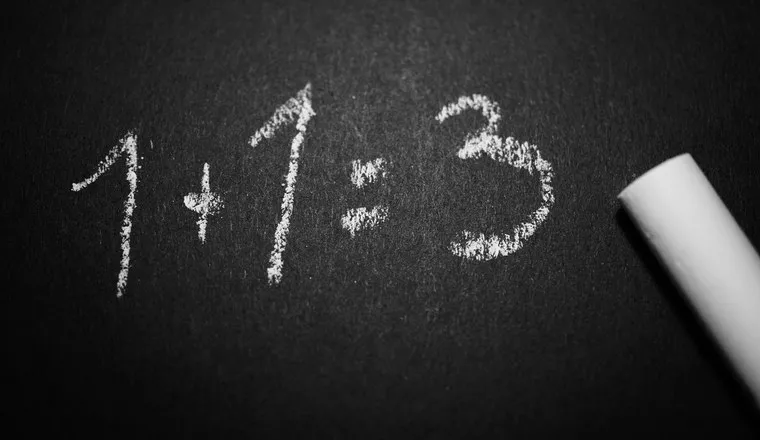
Error carried forward
Error carried forward means one early slip costs marks only once, so later steps that correctly use the wrong value can still earn marks.

Say you get a value wrong in part (a) of a question. Part (b) uses that value. Without this rule, one slip would cost marks twice. With it, the later work is judged on its method.
What CBSE's rules say
The instructions to examiners on CBSE's 2026 board marking schemes state it directly:
"No marks to be deducted for the cumulative effect of an error. It should be penalized only once."
CBSE's handbook on assessment calls the same idea "follow through". It allows marks for work "correctly following on from previously incorrect results". The handbook is guidance for people who set papers. For a real exam, that paper's own scheme decides.
A small example
A student halves a diameter of 28 cm and writes the radius as 7 cm. The area worked out from 7 cm is then wrong. The slip costs the radius step. The next step can still earn its mark if the formula is used correctly. This is how step marking and this rule work together.
And in ICSE?
CISCE does not print a rule on this in its yearly reports. Its report on the 2025 ICSE Physics paper shows how one slip travels. On one question, a calculation error in an earlier part made the next answer wrong, "though the concepts were clear". The report does not say whether that later part still earned marks. Our post on how ICSE Physics numericals are marked covers it.
Sources
Facts last checked against these sources on 30 September 2026.
About the author
Chief Architect
An engineer (B.Tech, Computer Science) with over 20 years of preparing students for entrance exams, including as Dean at FIITJEE and Vice-President at Aakash. He is the chief architect of the TRUpreBoards evaluation engine.
Mohit Sardana on LinkedIn