Reading an evaluated report
Marks earned, marks lost, and marks that were within reach - how the three differ and which one to act on.

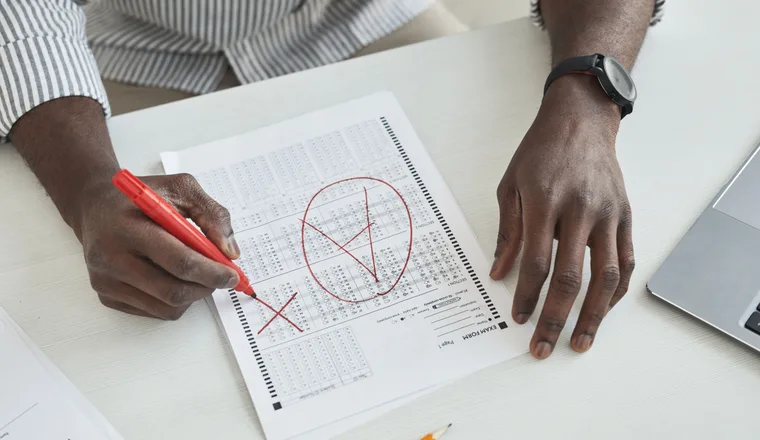
An evaluated report is not a mark with comments attached. It is a question-by-question account of where the marks went, and the single most useful habit when reading one is to separate three different things it tells you.
Earned, lost, recoverable
- Earned - marks the answer actually won, step by step, including on questions that ended at the wrong number.
- Lost - marks the answer could not have won, because the method or the understanding was not there.
- Recoverable - marks that were within reach and slipped: a step left unwritten, a unit dropped, a conclusion never stated.
That third category is the whole point of the exercise. Lost marks tell you what to teach; recoverable marks tell you what to fix this week, and they are usually the cheaper win by a wide margin.
Why a wrong answer still scores
Because the board marks the work, not just the result. A question is broken into steps and marks attach to them, so a correct method with an arithmetic slip near the end keeps most of its marks. What step marking means is the page on that, and it is worth reading before the report rather than after.
This is why the step-by-step breakdown matters more than the total. It shows the exact line where a question stopped earning, which is a far more actionable thing than a number out of eighty.
Read it beside the script
The report shows your child's own page with the marking on it, not a transcription. Seeing “the conclusion was never written” next to the place where it was not written is a different experience from reading the sentence alone - for a parent and considerably more so for the child.
What it will not tell you
Where your child stands against other children. Not withheld pending a setting - deliberately absent from the product. There is no position in a class list here, no comparison against a year group, and no number that answers “better or worse than whom”. A report is about one child's work and what to do about it next.
Comparison is against their own earlier papers instead, which is the only comparison that tells you whether anything is improving.
Sources
Facts last checked against these sources on 17 September 2026.
About the author

Founder Member & Director
An MBA (Finance and Strategy) with over 16 years across strategy, technology and operations. At TRUtesting he makes sure the platform is built to serve schools reliably and at scale.
Prabhjeet Singh on LinkedIn